
Incentives Against Hate
Intolerance of Intolerance is our most reliable incentive to protect society.

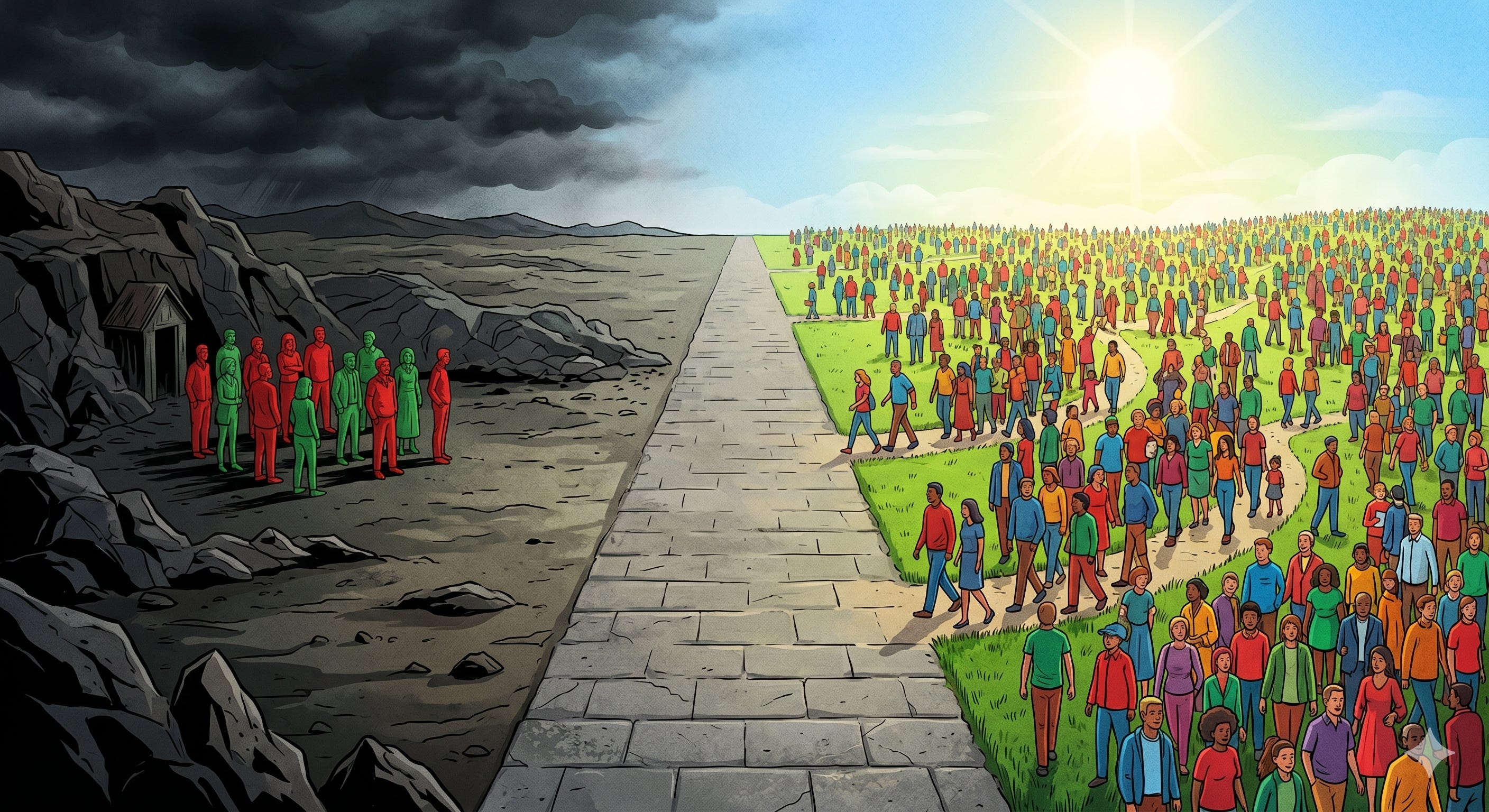
Hate pays. We must make it costly again.
I study incentives for a living. I had a front-row seat for over a decade at Google to see how the misaligned incentives of online advertising corrupted a trillion-dollar industry. Eventually, I was let go for speaking out about the company’s role in the “enshittification” of the internet—a process where platforms trade their user-centric souls for short-term revenue metrics. I’ve seen firsthand how perverse incentives cause untold societal harm. But the most dangerous incentive isn’t financial; it’s moral.
Right now, we are subsidizing hate. We have created a social ecosystem where spreading eliminationist bigotry—the kind that calls for the erasure or slaughter of entire groups—is high-reward and low-cost. If we want to protect a functional society, we have to flip the script. We need to make the most extreme forms of hate expensive again.
The Ackman Effect: Breaking the Social Monopoly
On October 8th, 2023, thirty-two Harvard student groups signed their names to a letter blaming Israel entirely for the atrocities committed against its own citizens the day before. For several days, the signatories enjoyed IRL and digital backslaps from their radical bubbles. Then, Bill Ackman sent a memo to his network of CEOs suggesting that these students should not be hired.
Within twenty-four hours, signatures began to vanish.
What Ackman did wasn’t a call for state censorship; it was a simple, elegant market correction. Prior to that memo, the only immediate cost these students perceived was local: the threat of immediate social ostracism from their campus peers if they refused to sign. Ackman broke the radicals’ monopoly on social pressure by introducing a counter-incentive from the real world. He reminded them that “polite society”—the world of employment and professional stability—has a standard. By making the cost of signing higher than the cost of defecting, he altered the math of their behavior overnight.
The Camouflage of the Mask
The movements seeking to shatter our social norms adapted quickly to this new friction. They learned that if you are going to break laws and civilizational taboos, you need to anonymize yourself. We’ve seen this through literal masks on campus and digital masks online. But there is also an intellectual mask at play: the use of pseudo-intellectual rhetoric designed to camouflage raw hatred.
While we cannot expect to perfectly police every anonymous account or every academic who is careful enough to avoid explicitly calling for violence, we can—and must—identify those who egregiously cross the line. Those are the ones we must ostracize. For those who are more careful, who use their platforms to sanitize and legitimize overt bigotry, we must apply the principle of moral guilt by association. If you provide the “intellectual” cover for eliminationist hate, you are part of the machinery of that hate.
The Lessons of History: How We Won Before
We have successfully used these levers before. When the Ku Klux Klan was a dominant force in American life, they weren’t defeated solely through courtroom battles or legislative changes. A critical lever was making their hate taboo. Civil society made the Klan socially and financially costly.
While we debated their ideas in the public square, we did not permit them to operate from within polite society or mainstream politics. We unmasked them, and we made sure that being a Klansman meant losing your job, your social standing, and your seat at the table. We didn’t allow their hatred to be “subsidized” by the silence of the majority.
The enforcement of these taboos serves a dual purpose. Even if it doesn’t always completely deradicalize the most hardened haters, it sends an unambiguous signal and acts as a massive deterrent to everyone else. By imposing real costs, we take the invisible guardrails of society and make them clearly visible. We simply need to find that same civic courage today.
The Guardrails of Restoration
To rebuild the social guardrails we’ve lost, we need more than just a vague sense of outrage. I have previously outlined the four principles to restore these taboos in a way that doesn’t violate the First Amendment or succumb to the excesses of cancel culture. We must rely on an objective blueprint, not emotional reactions, if we want to re-establish boundaries without descending into partisan censorship.
Tribal Shielding and the Silent Majority
Hate movements cannot scale without a named conduit—the leaders and influencers who provide a veneer of legitimacy to the mob. Real moral leadership requires “tribe-policing.” When the conservative commentator Charlie Kirk was killed, Bernie Sanders released a video condemning political violence in the abstract. It was a noble gesture, but incomplete. He did not denounce the specific members of his own tribe who were actively justifying the murder.
Denouncing violence from your opponents is easy; it is virtue signaling that costs you nothing. Real leadership requires closing the door on the radicals within your own tent. If you refuse to police your own tribe, you are effectively subsidizing their hate.
The Path Home: Tell Us and Show Us
This open door is the most vital part of the architecture of a healthy society. It ensures we don’t create a permanent underclass of outcasts. To be clear: while I can diagnose the social incentives that drive people toward hate, I believe in absolute accountability. I am empathetic to the human condition up until the point where it becomes suicidal for the rest of us. At that point, we must compel people to make a definitive choice.
We must take away the easy excuse that they are “just following their incentives” or behaving like passive, helpless hostages to a social movement. By introducing strict consequences, we force individuals to own their ideology. We make them choose: Do they opt for radical violent bigotry in opposition to our liberal values, or do they wish to remain part of polite society?
The door back to that society doesn’t open just because someone says the right words. It opens when they tell us, and show us, that they reject the civilizational floor. If someone was associated with a group they now regret, they must actively disassociate from it. We aren’t asking for a struggle session regarding their mainstream political views. It is a simple requirement: Tell us, and show us through your actions, that you reject political violence and hateful bigotry.
Conclusion
For too long, we have allowed a radical minority to dictate the costs of speech. The abuse of this power in the recent past gave us “cancel culture,” which resulted not just in undeserved ostracism but also a chilling effect of self-censorship. Ironically, the backlash against these excesses has left an open lane—a loophole—for the most egregious bigots to operate with impunity.
This climate allowed the silent majority to be bullied into submission. We must now free this moderate majority to express their true, unhateful beliefs by re-aligning their incentives. By showing that there is a real cost to hatred—and applying it strictly to those who egregiously cross the taboo line—we aren’t destroying our shared values; we are protecting the only ground on which a functional society can exist. It’s time to stop subsidizing our own demise and start making the most extreme forms of hate expensive again.
I like the ideas, but who is the constituency and what is the organizing program?